

In the coastal wetlands of Southern Thailand, where saltwater mingles with fresh and mangroves create intricate ecosystems, grows a humble plant that has sustained local communities for generations. Krajood (Lepironia articulata), a sedge grass native to these brackish waters, has become the foundation of a craft industry that represents both cultural heritage and economic opportunity for the region.
The Natural Bounty of Krajood
Krajood thrives in the unique ecological conditions of Southern Thailand’s wetlands, particularly in provinces like Phatthalung, Nakhon Si Thammarat, and Songkhla. This reed-like plant grows abundantly in these areas, reaching up to 2 meters in height. What makes krajood particularly valuable for crafting is its naturally strong fiber and flexibility when dried—qualities that artisans have recognized and utilized for centuries.
The harvest season typically runs during the drier months when water levels recede, allowing easier access to the plants. Harvesters, predominantly local women who have inherited this knowledge through generations, carefully select mature stems, cutting them at the base while leaving the roots intact to ensure sustainable regrowth.
From Reed to Remarkable Crafts
The transformation of krajood from raw material to finished product involves several meticulous steps:
- Harvesting and initial drying: After collection, the reeds undergo preliminary drying in the sun.
- Boiling and softening: The stems are often boiled with natural dyes if color is desired, or simply to make them more pliable.
- Complete drying: The processed reeds are thoroughly dried again to prevent mold or deterioration.
- Weaving: Using techniques passed down through generations, artisans weave the krajood strands into various patterns and products.
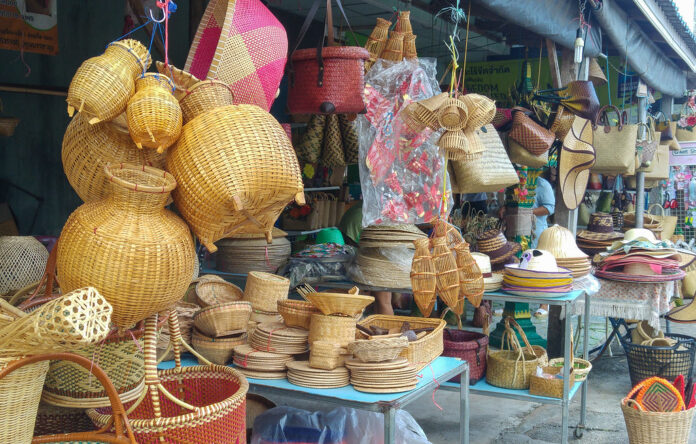
The traditional products made from krajood include mats, baskets, bags, hats, and decorative items. Each region often has distinctive weaving patterns and techniques that identify the origin of the craft, making these items not just utilitarian but expressions of local cultural identity.
Economic Impact and Community Development
The krajood industry has emerged as a significant source of supplementary income for rural communities in Southern Thailand. What began as household crafts primarily created for local use has expanded into a cottage industry with market reach extending to urban centers and international markets.
Several factors have contributed to this growth:
- Government support: Various Thai government initiatives have promoted traditional crafts as part of cultural preservation and rural development programs.
- Cooperative formations: Local artisans have formed cooperatives to strengthen their market position, share resources, and maintain quality standards.
- Tourism integration: As sustainable tourism grows in Thailand, krajood products have found new markets among visitors seeking authentic, locally-made souvenirs.
- Design innovation: Contemporary designers have collaborated with traditional artisans to create modern products that appeal to urban and international consumers while preserving traditional techniques.
In communities like Ban Thale Noi in Phatthalung province, home to one of Thailand’s largest wetland conservation areas, krajood crafting provides essential income for families, particularly during off-seasons from fishing or agriculture. These supplementary earnings often make the difference in affording education for children or healthcare for family members.
Sustainability Challenges and Solutions
Despite its cultural and economic importance, the krajood industry faces several challenges:
Environmental pressures: Climate change, land development, and water pollution threaten the wetland ecosystems where krajood grows. Changing rainfall patterns and increasing salinity levels in some areas have affected plant growth and quality.
Market competition: Mass-produced synthetic alternatives often undercut the price of handcrafted krajood products, challenging the economic viability of traditional crafting.
Aging artisan population: As younger generations pursue education and employment opportunities in urban areas, there’s concern about the continuity of traditional knowledge and skills.
In response, communities and supporting organizations have developed initiatives to address these challenges:
- Conservation efforts: Many krajood-crafting communities now actively participate in wetland conservation, recognizing the direct link between ecological health and their livelihoods.
- Value-added marketing: By emphasizing the ecological and cultural value of krajood products, artisans differentiate their offerings from mass-produced alternatives.
- Skills transfer programs: Formal and informal education programs help transmit traditional knowledge to younger community members.
- Certification systems: Some communities have established geographic indication certifications to protect the authenticity and value of their specific krajood crafting traditions.
The Future of Krajood: Innovation with Tradition
The krajood industry of Southern Thailand stands at an interesting crossroads—balancing preservation of traditional techniques with adaptation to contemporary markets and environmental realities. Several promising developments suggest a sustainable path forward:
Product diversification: Beyond traditional items, krajood is now being incorporated into contemporary home décor, fashion accessories, and even high-end hotel furnishings.
Eco-tourism integration: Some communities offer workshops where visitors can learn about krajood harvesting and basic weaving techniques, creating direct cultural exchange and additional income streams.
Cross-cultural collaborations: International designers and fair-trade organizations have partnered with krajood artisans to create products that reach global markets while ensuring fair compensation for craftspeople.
Research and development: Academic institutions are studying ways to enhance krajood cultivation, processing techniques, and preservation methods to improve product longevity and quality.
Conclusion
The krajood industry of Southern Thailand represents more than just a craft tradition—it embodies the harmonious relationship between communities and their natural environment, the resilience of local knowledge systems, and the potential for sustainable economic development rooted in cultural heritage.
As consumers worldwide increasingly seek authentic, sustainable alternatives to mass-produced goods, the carefully woven krajood products from the wetlands of Southern Thailand offer both tangible connections to traditional craftsmanship and support for communities maintaining these valuable cultural practices.
For the artisans who transform these humble reeds into objects of beauty and utility, krajood represents not just a source of income but a continuation of identity—hands working today as they have for generations, weaving not just fibers but the past and future together into something that endures.